
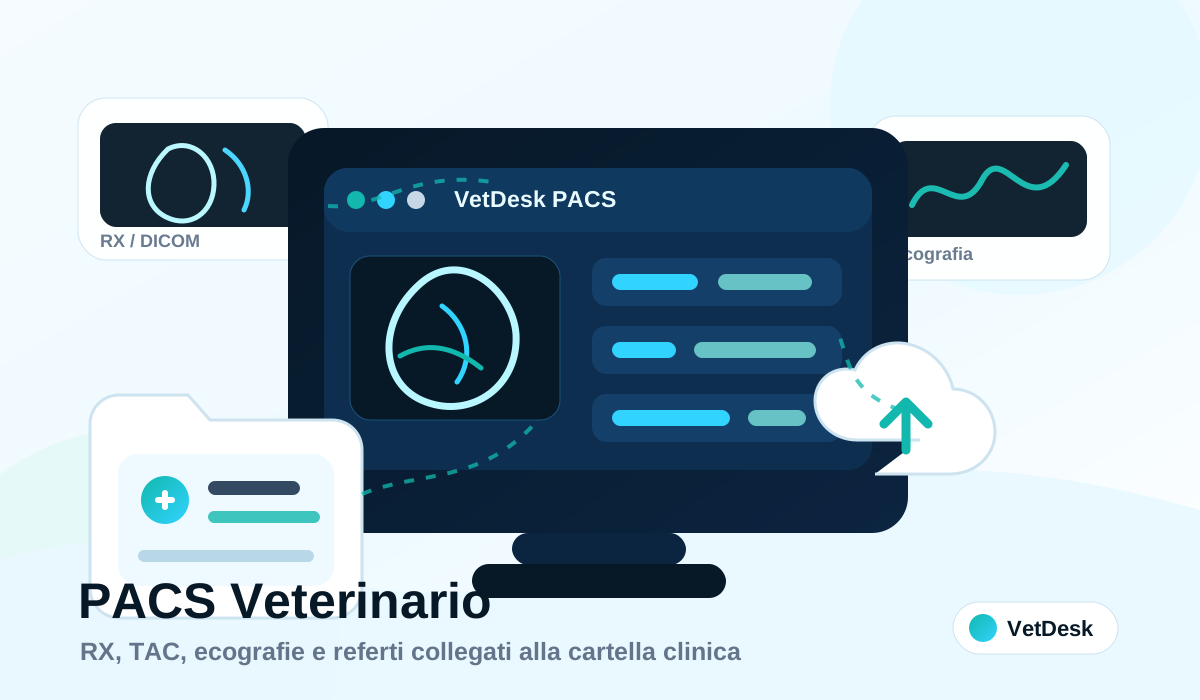
Veterinary diagnostics produces more and more images
In recent years, veterinary clinics have made a great technological leap. Digital radiology, ultrasound, CT scan, magnetic resonance imaging, endoscopy and dental diagnostics are now increasingly present tools even in medium-sized veterinary facilities.
This improvement brings with it a huge advantage: faster diagnoses, more precise checks and better clinical continuity. At the same time, however, it generates a new organizational need: correctly manage all diagnostic images produced every day.
When a clinic saves tests on local folders, USB sticks, external hard drives or separate computers, the risk is wasting time, duplicating files and not finding information quickly when you really need it.
What is a veterinary PACS
The term PACS means Picture Archiving and Communication System. Simply put, it is a system that allows you to store, view, organize and share digital diagnostic images.
A Veterinary PACS it is therefore a platform designed to manage the images produced by the diagnostic equipment used in the clinic, such as:
- digital x-rays;
- ultrasounds;
- CT;
- magnetic resonance imaging;
- endoscopies;
- dental tomography;
- other exams compatible with digital or DICOM streams.
The goal is not just to keep the files, but to render them easy to find, connected to the correct patient and available to the veterinarian at the time of the visit, report or follow-up.
How a veterinary PACS works
The operation of a veterinary PACS starts from the acquisition of the diagnostic exam. When an x-ray, CT scan or ultrasound is performed, the device generates a series of digital images. These images can be sent to the archiving system and made available to authorized personnel.
1. Image acquisition
The images are collected by the diagnostic equipment present in the facility. In an advanced configuration, the system can automatically acquire the files produced by the devices, reducing the manual work of the staff.
2. Organized storage
The tests are stored in an orderly manner, with references to the patient, the date, the type of test and the clinic that produced it. This avoids the classic situation where images are saved in generic folders that are difficult to consult.
3. Link to medical record
True value arises when the PACS does not remain separate from the management system, but is connected to it digital veterinary medical record. In this way the veterinarian can consult the entire clinical history of the patient together with the diagnostic tests.
4. Viewing and sharing
The images can be consulted by the clinical team and, when necessary, shared with colleagues, specialists, external referees or animal owners through secure links.
The problems of a clinic without PACS
In many veterinary facilities, diagnostic imaging is already digital, but file management is still poorly organised. This creates daily problems that are often underestimated.
Files spread across multiple computers
One exam can be located on the radiology computer, another in the shared folder, yet another on a USB stick or on an external hard disk. When you need to quickly retrieve an image, your staff wastes valuable time.
Risk of data loss
If images are only saved locally, a computer or disk failure can compromise years of diagnostic archive.
Difficulty comparing exams
For many pathologies it is essential to compare images taken at different times. If the tests are not linked to the same medical record, the comparison becomes slower and less immediate.
Unprofessional sharing
Sending images via unstructured channels, heavy attachments or improvised systems can lead to confusion and a less professional perception on the part of the customer.
The advantages of a modern veterinary PACS
A well-designed veterinary PACS improves clinic organization and makes diagnostics run more smoothly.
- Quick access to exams: the vet finds the images in seconds.
- Fewer errors: the tests are linked to the correct patient.
- Centralized archive: the images do not remain dispersed between computers and folders.
- Better clinical continuity: every professional can consult the patient's diagnostic history.
- Easier collaboration: specialists and referees can receive exams in an orderly manner.
- Better customer experience: the owner can receive images and reports in a more modern and professional way.
PACS and DICOM protocol in veterinary medicine
When talking about PACS it is important to mention the protocol DICOM, a standard used for the management and exchange of medical images. Even in the veterinary field, many diagnostic equipment use or support flows compatible with this standard.
DICOM compatibility allows different devices to communicate with a central storage system. This is especially important when a clinic uses equipment from different manufacturers, such as a digital x-ray, an ultrasound and a CT scan.
Before choosing a PACS solution, a clinic should check what equipment needs to be connected, what formats they produce and what level of integration is really needed.
PACS integrated into the medical record: the real leap in quality
A separate PACS can already help the clinic to better organize images. However, the real leap in quality comes when the PACS is integrated into the veterinary management system and the medical record.
In traditional management, the veterinarian must open multiple programs: one for the diary, one for the medical record, one for radiology, one for reports and perhaps another for sharing files. This slows down work and increases the risk of forgetting.
With an integrated system, however, the flow becomes much more natural:
- the patient file opens;
- the clinical history is consulted;
- diagnostic tests are displayed;
- the report is written or attached;
- the material is shared with the client or with a specialist.
It all happens in the same ecosystem. This means fewer steps, less confusion and a tidier clinic.
The role of artificial intelligence in veterinary diagnostics
Diagnostic imaging is entering a new phase. Artificial intelligence can support the veterinarian in organizing exams, in assisted reading of images and in comparing subsequent checks.
It is important to clarify one point: AI does not replace the veterinary doctor. Its value is that of offering a support tool, capable of speeding up some activities and helping the professional to work with more information available.
When PACS, medical records and AI work together, the clinic can build a more modern, traceable and collaborative diagnostic flow.
How VetDesk interprets veterinary PACS
VetDesk was born as an intelligent platform for the modern veterinary clinic. The goal is not to add separate tools, but to connect clinical work, management, diagnostics and operations in a single environment.
In the context of diagnostic imaging, VetDesk aims to make exams a natural part of the patient's medical record. X-rays, ultrasounds, diagnostic images and reports must be able to be consulted where they are really needed: in the animal's clinical history.
This approach helps the structure to overcome the logic of scattered files and build a more orderly, accessible and useful clinical archive for the whole team.
When should a clinic evaluate a PACS
A veterinary clinic should begin evaluating a PACS when:
- produces many diagnostic images each week;
- has more equipment to connect;
- collaborates with external specialists or referees;
- has difficulty catching up on previous exams;
- wants to improve the quality of clinical documentation;
- wants to offer customers a more digital and professional service.
You don't have to be a large hospital to benefit from a tidier system. Even a medium-sized clinic can reduce downtime, errors and confusion with smarter image management.
Conclusions
Veterinary PACS is not just an image archive. It's a tool that can change the way a clinic manages diagnostics, collaborates internally, and communicates with owners and specialists.
In an increasingly digital sector, continuing to manage X-rays, ultrasounds and CT scans with scattered folders or external media means losing efficiency and increasing the risk of disorder.
The most effective direction is that of an integrated system, where diagnostic images, medical records, reports, AI and communication work together. It is precisely in this direction that VetDesk is moving: a platform designed to make the veterinary clinic more organised, modern and connected.
Veterinary PACS FAQ
What is a veterinary PACS?
It is a system for storing, organizing, viewing and sharing veterinary diagnostic images such as x-rays, ultrasounds, CT scans, MRIs and endoscopies.
Is a PACS only for large clinics?
No. Even a medium-sized clinic can benefit from a PACS, especially if it produces many diagnostic images or collaborates with external specialists.
What is the difference between PACS and medical records?
PACS primarily handles diagnostic images. The medical record collects the patient's health history. When the two systems are integrated, the veterinarian's job becomes much easier.
Can PACS help with exam sharing?
Yes. A modern system allows you to share images and reports in a more orderly and professional way, even via secure links.
Can VetDesk integrate diagnostics into the medical record?
Yes. VetDesk's goal is to connect medical records, diagnostics, reports, AI and operational management into a single workflow.